Stop Calling This a Rivalry, India vs Pakistan!
On geography, memory and a rivalry which is not anymore.

Every kid learns about their neighbouring countries when cognition begins to shape. For some kids, that education comes through political speak. For some, through school atlases and history books.
If you are lucky like me, you learnt geography through cricket.
I was educated about the confines of my country by the game itself.
Sri Lanka was a cricket team before it was a country. I didn’t know Ramayana-to-map connections yet. But I knew Aravinda de Silva, Jayasuriya, Chaminda Vaas, Ranatunga.
Dimunitive de Silva in an oversized t-shirt dismissing Sachin on 97 in the 2003 World Cup still lives in my head. I remember a Sharjah night when India were bowled out for 54. Couldn’t even watch it live because of a power cut. Found out about the humiliation the next morning in the Hindi daily.
With time, I learnt Sri Lanka was also a country.
Pakistan was different. Anything to do with Pakistan was always dicey. India–Pakistan cricket fixture is a rivalry that (survived) itself.
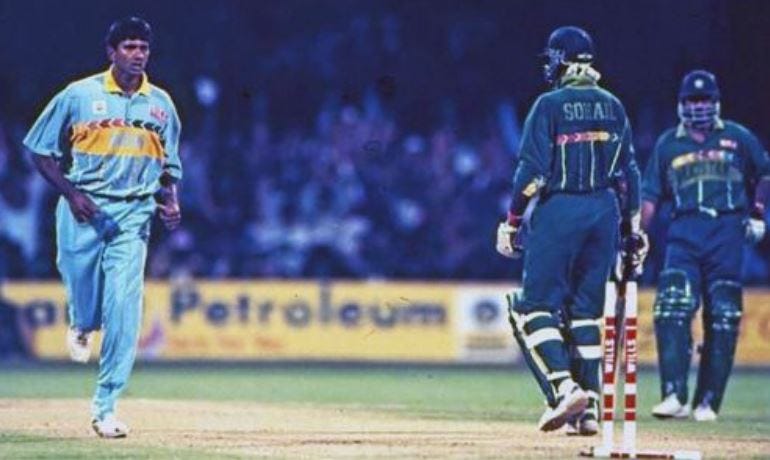
In 1990s Bihar, there was no electricity. For months at a stretch. No bulbs. No fans. Transmission wires were stolen, melted in illegal smelters, and sold as copper metal balls. Homes smelled of kerosene while radios crackled in the evenings.
Whenever a big cricket match approached, people kept large black batteries at home. Battery shops flourished.
Our family had rented out a few shops in those days. Two of them were Moon Radios and Javed Batteries, run by Munna and Javed, sons of Rahman Saheb. Many of those India–Pakistan games I watched were inside these two shops.
Sharjah day-night games ended when the town slept - except those listening on radio or watching on battery-powered black-and-white TVs. Some people preferred the green team. In those days, our team did not fare as well as the green team.
If Pakistan won, firecrackers went off half a kilometer south of my house.
That’s not metaphor.
That’s memory.
I don’t know what ideology drove it. Political. Religious. Tribal. Most of the town didn’t understand geopolitics. But they knew who they were rooting for.
I, as a child, inherited these fault lines.
People say separate sport from politics. In the subcontinent, that has never existed.
Cricket didn’t just entertain us.
It organised identity.
It told us who we were supposed to hate, fear, admire, and become.
For some reason, my earliest India–Pakistan cricket memories also coincide with the Kargil War of 1999.
Parading nuclear weapons wasn’t an option so the two countries paraded their cricketing talent.
Pakistan paraded raw menace in the form of their fast bowlers.
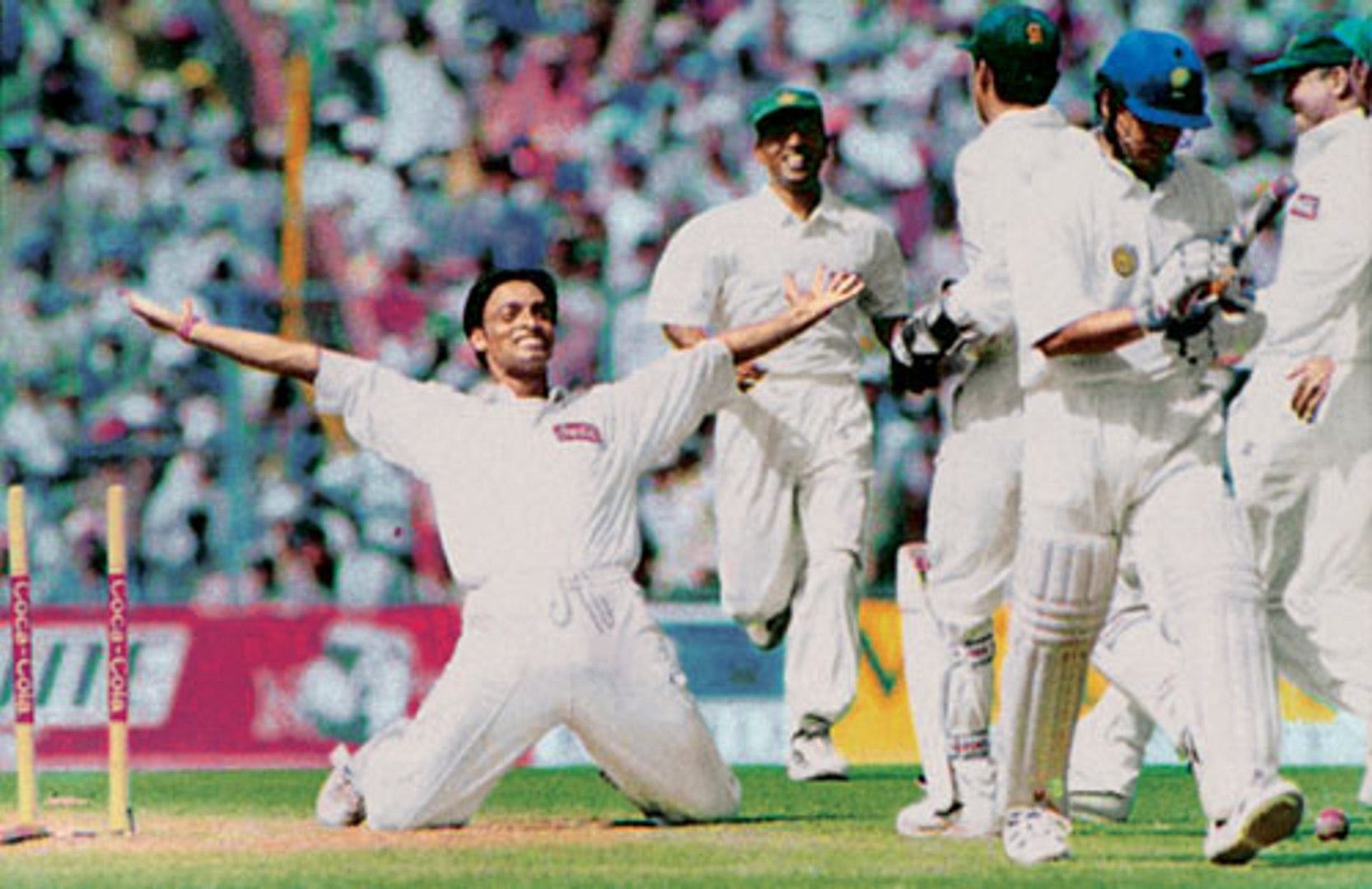
We paraded a cherubic, short wunderkind from Bombay.
The Master Blaster. Batting prowess unmatched.
When Sachin batted, trains ran late. Streets emptied.
I’ve often wondered why, in a country of 200 million Muslims, India hasn’t produced a Muslim batting great of the highest tier. Azhar is the only name that enters without hesitation. I don’t have a clean answer. But I can take a guess.
Partition didn’t just split land.
It split networks.
Institutions.
Sporting pipelines.
What leaves in migration isn’t just people. It’s continuity.
While India banked on the strength of its institutional structures to produce cricketing greats, Pakistan, meanwhile, manufactured chaos.
Abdul Razzaq.
Inzamam
Younis Khan.
Mohammad Yousuf.
Shahid Afridi.
We hated them when they scored against us.
Admired them when they scored against others.
Misbah was granite.
Afridi ground you into dust. Boom boom.
Apart from Shane Warne, the most copied bowling action growing up was Shoaib Akhtar’s.
Hair flying.
Chest out.
Anger in motion.
Fast bowling was masculinity expressed in miles per hour.
Back in the day, the India-Pakistan rivalry meant something.
Now they’re branding exercises. Mauka-Mauka and ‘how was the tea?’
The last time I saw India-Pakistan in a stadium was during the 2023 World Cup. A Pakistani reporter asked me what the difference was between the two teams.


I said: “Confidence. When an Indian batsman played a shot, you know it’s hit with intent just by the sound of cherry meeting the willow. And when Pakistan were batting, it looked pedestrian to say the least. No blood in those shots. The ball hitting the bat didn’t sound any similar.”
I watched the three India-Pak Asia Cup(2025) matches after that. India won all the three games. Only the final had a flicker of contest.
Today Pakistan’s team doesn’t exude fear.
Saim Ayub.
Salman Agha.
Faheem Ashraf.
Good boys. Polite faces. But not mean enough.
Great rivalries are built by bad men with great skill.
Where are those Pakistani men who look offended by your mere existence? Where are the Javed Miandads and Moin Khans?
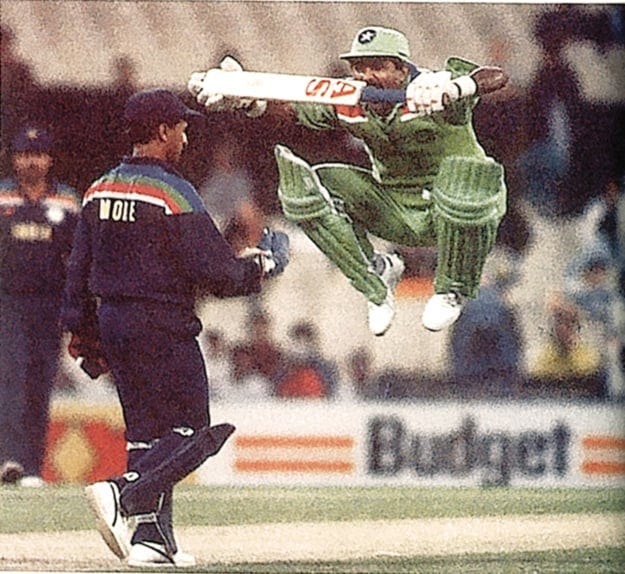
Pakistan once produced street fighters. Now they produce meek professionals who globetrot in mindless T20 leagues. Meek don’t frighten.
And this didn’t happen by accident. It takes me back to a book(Cricket Cauldron) by Shahryar Khan, the former PCB chairman.
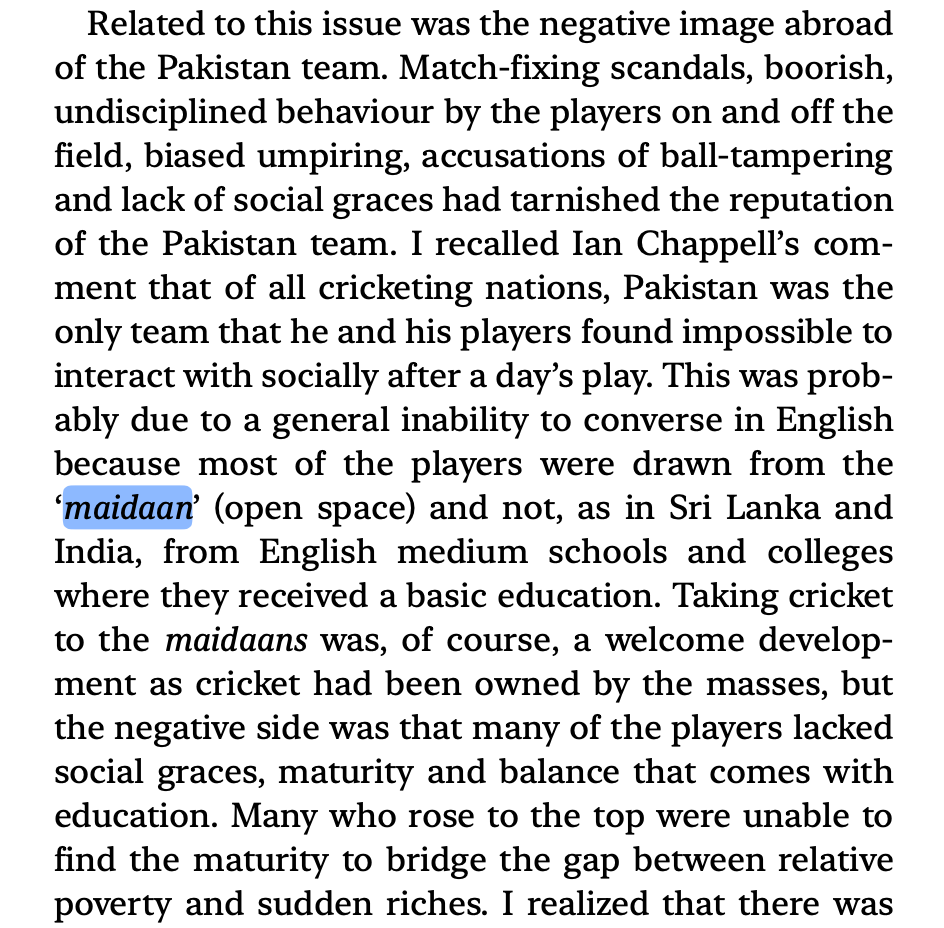
He called Pakistani players maidan cricketers.
Sneers at their lack of “civilization.” Even implies they didn’t know how to use Western toilets.
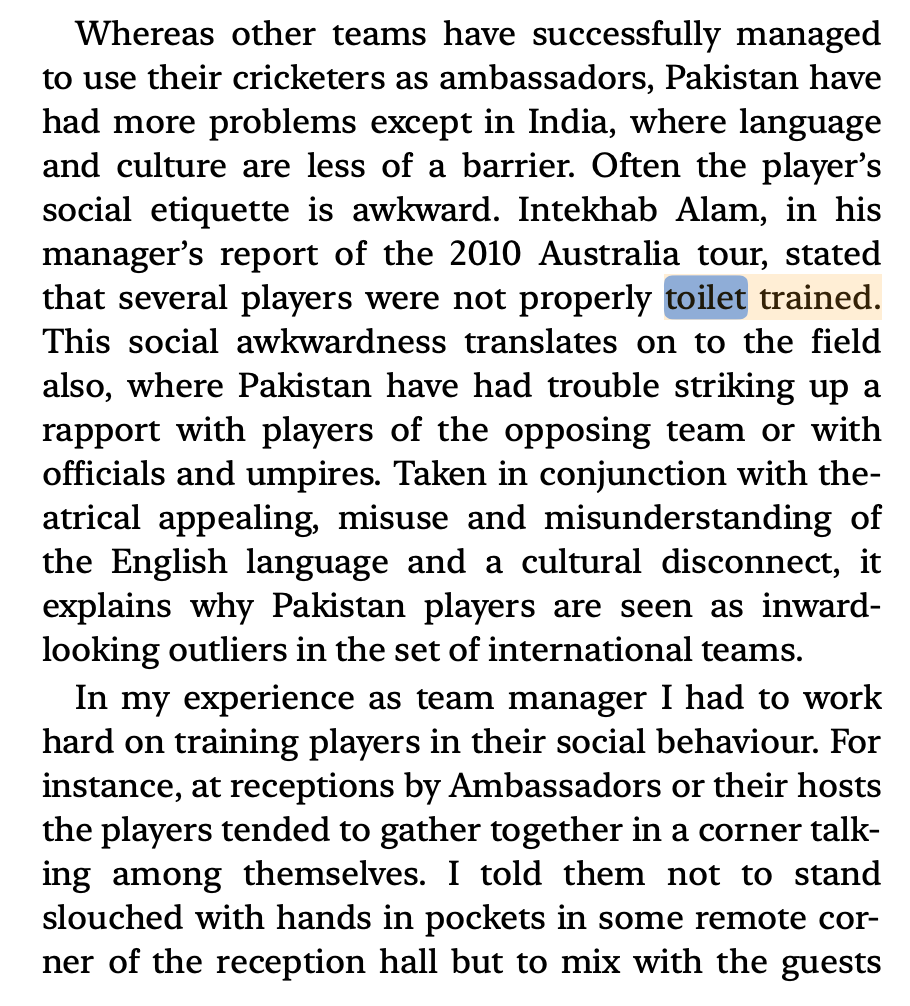
A man who chaired PCB should be the last person writing such stuff about his own players.
You don’t speak of your own boys like this.
Cricketers in the subcontinent aren’t entertainers first. They’re foot soldiers of national confidence.
No sporting nation survives when its elites are embarrassed by the source of its talent.
And unlike Pakistan, Indian cricket celebrates the diversity of its talent pool.
India is larger.
Wealthier.
Structurally stronger.
The asymmetry is real.
On the pitch, only skill matters. But even there, there’s imbalance.
Some PSL franchises operate on budgets smaller than the salary of one IPL superstar.
That’s not disparity. That’s domination.
The IPL isn’t a league anymore. It’s an ecosystem.
Talent flows toward ecosystems.
When I look at Mohammad Rizwan or Babar Azam, I feel conflicted.
Babar has a beautiful cover drive. But something is missing.
Pakistan once dictated tempo through personality.
Now it tries to chase it.
Growing up, Indians fantasised about having Pakistan’s fast bowlers in our own team.
We had the Big Four.
We made runs everywhere.
We couldn’t take wickets abroad.
Across the border in Pakistan, they manufactured hostility. Even when imperfect, they were dangerous. They weren’t boring.
Where has that factory gone?
Maybe the problem isn’t talent.
Maybe it’s how they treat their players.
When elites mock maidan cricketers, rawness dies.
On 15th Feb, I expect India to rout Pakistan again.
If India aren’t three down inside two overs, I give zero chances to Pakistan.
They don’t have a fast bowler like Mohammad Amir anymore.
They don’t have anyone who can flip a game in ten balls.
Pakistan will lose comfortably.
And still, like the cricket watcher I am, I’ll sit down and watch the game.
I’ll follow the game.
I’ll cheer for my team.
I’ll pretend, for a few overs, that something interesting might happen.
Not because I believe in miracles.
But because once upon a time, in a town with no electricity, this rivalry educated me on what the geography of my country looked like.
That’s reason enough.
I wish Pakistan to show character on the ground in Colombo. Don’t win.
Fight.
Show me that you are still from the maidans.
Aah. I don't follow a lot of cricket anymore. But I strongly suspect that the 'mauka mauka' approach has taken us away from the game & player to a manufactured entertainment. Everybody is performing to that end.